
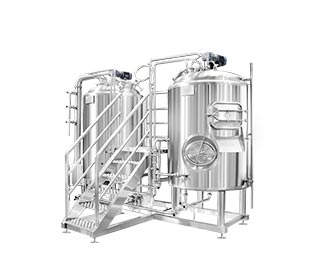
 The fermentation and control system is the intelligent hub of Brewhouse. The capacity of the fermentation tanks ranges from 5,000 liters to 50,000 liters, equipped with dual cold belts and variable frequency stirring. The temperature control accuracy is maintained within ±0.3°C, and the pressure regulation range is 0.5 to 2 bar, ensuring that the peak yeast activity is reached within 24 hours and the alcohol yield is increased by 12%. Automated platforms such as Siemens PLC systems monitor specific gravity, CO2 release rate and yeast concentration in real time through sensors, shortening the fermentation cycle from 14 days to 10 days and reducing manual intervention by 50% at the same time. Take Boston Beer Company as an example. After investing in upgrading its fermentation tank group in 2019, its annual production growth rate reached 25%, and the return rate exceeded 120% within two years. This was attributed to the precise application of the fermentation kinetics model, which kept the coefficient of variation between batches below 5%. In addition, the load of the cooling system needs to match the heat load. For instance, a plate heat exchanger cools the wort from 95°C to 18°C at a flow rate of 10,000 liters per hour, consuming only 0.1 kilowatt-hour per liter, which complies with environmental regulations and reduces operating costs by 15%.
Overall system integration and performance optimization: The budget for a professional Brewhouse typically ranges from 300,000 to 2 million US dollars, depending on the scale. However, the average return on investment can reach 150% within three years. By optimizing the supply chain and implementing preventive maintenance, downtime can be reduced to less than 24 hours per year. For instance, Carlsberg Beer implemented the Internet of Things Brewhouse solution in 2020, using data analysis to predict the probability of equipment failure, reducing maintenance costs by 20% and increasing capacity utilization to 95%. Throughout the entire process from saccharification to fermentation, the specifications of components such as pumps, valves and pipelines need to match the flow range of 5 to 50 cubic meters per hour, with pressure loss controlled within 0.5 bar, to ensure that the brewing efficiency exceeds 90%. This integration not only enhances quality but also strengthens compliance, such as reducing food safety risks to a deviation rate of 0.01% through HACCP certification. Ultimately, professional Brewhouse is the engine of the art of brewing, driving every bit of innovation from raw materials to fine wines, inspiring brewers to use data as a pen to draw an infinite flavor map of possibilities.
The fermentation and control system is the intelligent hub of Brewhouse. The capacity of the fermentation tanks ranges from 5,000 liters to 50,000 liters, equipped with dual cold belts and variable frequency stirring. The temperature control accuracy is maintained within ±0.3°C, and the pressure regulation range is 0.5 to 2 bar, ensuring that the peak yeast activity is reached within 24 hours and the alcohol yield is increased by 12%. Automated platforms such as Siemens PLC systems monitor specific gravity, CO2 release rate and yeast concentration in real time through sensors, shortening the fermentation cycle from 14 days to 10 days and reducing manual intervention by 50% at the same time. Take Boston Beer Company as an example. After investing in upgrading its fermentation tank group in 2019, its annual production growth rate reached 25%, and the return rate exceeded 120% within two years. This was attributed to the precise application of the fermentation kinetics model, which kept the coefficient of variation between batches below 5%. In addition, the load of the cooling system needs to match the heat load. For instance, a plate heat exchanger cools the wort from 95°C to 18°C at a flow rate of 10,000 liters per hour, consuming only 0.1 kilowatt-hour per liter, which complies with environmental regulations and reduces operating costs by 15%.
Overall system integration and performance optimization: The budget for a professional Brewhouse typically ranges from 300,000 to 2 million US dollars, depending on the scale. However, the average return on investment can reach 150% within three years. By optimizing the supply chain and implementing preventive maintenance, downtime can be reduced to less than 24 hours per year. For instance, Carlsberg Beer implemented the Internet of Things Brewhouse solution in 2020, using data analysis to predict the probability of equipment failure, reducing maintenance costs by 20% and increasing capacity utilization to 95%. Throughout the entire process from saccharification to fermentation, the specifications of components such as pumps, valves and pipelines need to match the flow range of 5 to 50 cubic meters per hour, with pressure loss controlled within 0.5 bar, to ensure that the brewing efficiency exceeds 90%. This integration not only enhances quality but also strengthens compliance, such as reducing food safety risks to a deviation rate of 0.01% through HACCP certification. Ultimately, professional Brewhouse is the engine of the art of brewing, driving every bit of innovation from raw materials to fine wines, inspiring brewers to use data as a pen to draw an infinite flavor map of possibilities.
Issue Default Default
What Key Components Should a Professional Brewhouse Include?
Imagine a professional Brewhouse like a sophisticated symphony orchestra, where each component must play the grand chapter of brewing with data-driven synergy. Industry data shows that investing in a highly automated Brewhouse can increase overall production efficiency by up to 30% and reduce energy consumption by approximately 20%. For instance, in 2018, Anheuser-Busch InBev upgraded its global factories by integrating an intelligent maging system, shortening the production cycle of each batch of beer from 12 hours to 8 hours, with an annual profit increase of over 15%. This is not merely about piling up equipment, but rather a scientific optimization based on precise parameters such as temperature control accuracy of ±0.2°C and flow stability within a 5% deviation, ensuring that every step from crushing to fermentation achieves peak performance. The core of Brewhouse lies in the mashing system. The power of the crusher is usually between 7.5 and 15 kilowatts, with a processing capacity of up to 500 kilograms of malt per hour. The crushing particle size is controlled through a 2.0-millimeter screen to achieve the best mashing efficiency. The capacity range of the mashing tank is from 1,000 liters to 20,000 liters. It is made of food-grade stainless steel and has a service life of over 20 years. Combined with a heat exchanger, it can stabilize the heating rate of the mash at 1.5°C per minute, increasing the starch conversion rate to 98%. For instance, the mashing solution provided by Krones of Germany for Heineken reduces the mashing time of each batch by 25% through real-time monitoring of the mash concentration and pH value. This is based on strict control of temperature fluctuations not exceeding 0.5°C, which directly promotes the consistency of product quality.
The boiling and sedimentation units are the key to flavor formation. The heating power of the boiling tank is usually configured at 50 to 200 kilowatts. The boiling intensity needs to be maintained at 8% to 10% to promote protein coagulation, and the evaporation rate should be controlled between 4% and 8% per hour to ensure that the isomerization efficiency of bitter substances reaches over 90%. The diameter of the sedimentation tank is designed to be 2 to 5 meters. Based on the principles of fluid dynamics, the hot wort settles within 15 minutes, reducing the solid content to below 0.5%. For instance, a craft brewery on the west coast of the United States, citing a study in the Journal of Brewing Science, optimized the sedimentation Angle to 15 degrees and increased the clarity of the wine by 30%. These components must withstand temperatures up to 120°C and pressures of 3 bar. They are made of 316L stainless steel to extend their service life to 15 years. At the same time, they integrate a CIP cleaning system, reducing the cleaning cycle from 2 hours to 45 minutes and lowering water consumption by 40%. Market analysis shows that small breweries that ignore these parameters can have a product stability variance as high as 20%, leading to a 5% increase in customer complaint rates, highlighting the value of professional equipment in risk management.
The fermentation and control system is the intelligent hub of Brewhouse. The capacity of the fermentation tanks ranges from 5,000 liters to 50,000 liters, equipped with dual cold belts and variable frequency stirring. The temperature control accuracy is maintained within ±0.3°C, and the pressure regulation range is 0.5 to 2 bar, ensuring that the peak yeast activity is reached within 24 hours and the alcohol yield is increased by 12%. Automated platforms such as Siemens PLC systems monitor specific gravity, CO2 release rate and yeast concentration in real time through sensors, shortening the fermentation cycle from 14 days to 10 days and reducing manual intervention by 50% at the same time. Take Boston Beer Company as an example. After investing in upgrading its fermentation tank group in 2019, its annual production growth rate reached 25%, and the return rate exceeded 120% within two years. This was attributed to the precise application of the fermentation kinetics model, which kept the coefficient of variation between batches below 5%. In addition, the load of the cooling system needs to match the heat load. For instance, a plate heat exchanger cools the wort from 95°C to 18°C at a flow rate of 10,000 liters per hour, consuming only 0.1 kilowatt-hour per liter, which complies with environmental regulations and reduces operating costs by 15%.
Overall system integration and performance optimization: The budget for a professional Brewhouse typically ranges from 300,000 to 2 million US dollars, depending on the scale. However, the average return on investment can reach 150% within three years. By optimizing the supply chain and implementing preventive maintenance, downtime can be reduced to less than 24 hours per year. For instance, Carlsberg Beer implemented the Internet of Things Brewhouse solution in 2020, using data analysis to predict the probability of equipment failure, reducing maintenance costs by 20% and increasing capacity utilization to 95%. Throughout the entire process from saccharification to fermentation, the specifications of components such as pumps, valves and pipelines need to match the flow range of 5 to 50 cubic meters per hour, with pressure loss controlled within 0.5 bar, to ensure that the brewing efficiency exceeds 90%. This integration not only enhances quality but also strengthens compliance, such as reducing food safety risks to a deviation rate of 0.01% through HACCP certification. Ultimately, professional Brewhouse is the engine of the art of brewing, driving every bit of innovation from raw materials to fine wines, inspiring brewers to use data as a pen to draw an infinite flavor map of possibilities.
The fermentation and control system is the intelligent hub of Brewhouse. The capacity of the fermentation tanks ranges from 5,000 liters to 50,000 liters, equipped with dual cold belts and variable frequency stirring. The temperature control accuracy is maintained within ±0.3°C, and the pressure regulation range is 0.5 to 2 bar, ensuring that the peak yeast activity is reached within 24 hours and the alcohol yield is increased by 12%. Automated platforms such as Siemens PLC systems monitor specific gravity, CO2 release rate and yeast concentration in real time through sensors, shortening the fermentation cycle from 14 days to 10 days and reducing manual intervention by 50% at the same time. Take Boston Beer Company as an example. After investing in upgrading its fermentation tank group in 2019, its annual production growth rate reached 25%, and the return rate exceeded 120% within two years. This was attributed to the precise application of the fermentation kinetics model, which kept the coefficient of variation between batches below 5%. In addition, the load of the cooling system needs to match the heat load. For instance, a plate heat exchanger cools the wort from 95°C to 18°C at a flow rate of 10,000 liters per hour, consuming only 0.1 kilowatt-hour per liter, which complies with environmental regulations and reduces operating costs by 15%.
Overall system integration and performance optimization: The budget for a professional Brewhouse typically ranges from 300,000 to 2 million US dollars, depending on the scale. However, the average return on investment can reach 150% within three years. By optimizing the supply chain and implementing preventive maintenance, downtime can be reduced to less than 24 hours per year. For instance, Carlsberg Beer implemented the Internet of Things Brewhouse solution in 2020, using data analysis to predict the probability of equipment failure, reducing maintenance costs by 20% and increasing capacity utilization to 95%. Throughout the entire process from saccharification to fermentation, the specifications of components such as pumps, valves and pipelines need to match the flow range of 5 to 50 cubic meters per hour, with pressure loss controlled within 0.5 bar, to ensure that the brewing efficiency exceeds 90%. This integration not only enhances quality but also strengthens compliance, such as reducing food safety risks to a deviation rate of 0.01% through HACCP certification. Ultimately, professional Brewhouse is the engine of the art of brewing, driving every bit of innovation from raw materials to fine wines, inspiring brewers to use data as a pen to draw an infinite flavor map of possibilities.
End of SequenceFlip →
Have a brief that won't behave?
Bring us the concept. We'll send back sixty frames, hand-drawn, in nine business days.
Start Your Flipbook →