
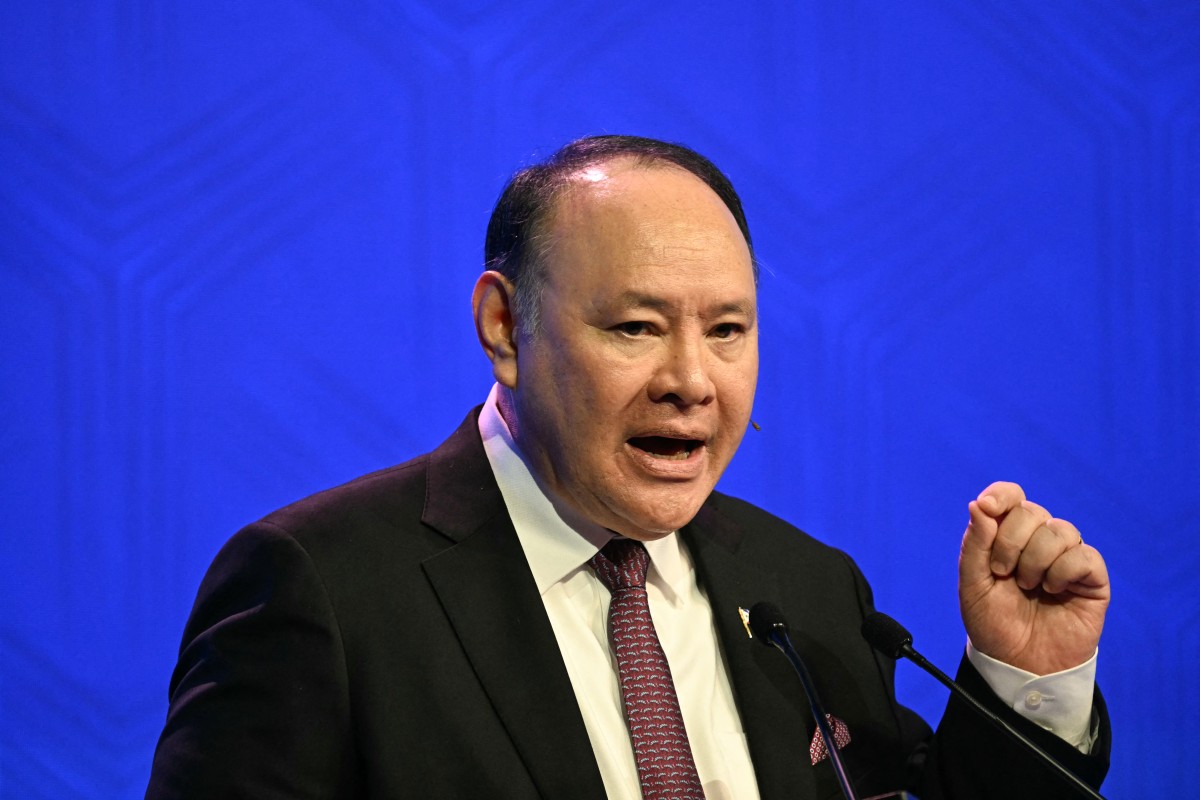
The recent announcement from Beijing regarding targeted sanctions against the Philippine Defense Secretary, Gilberto Teodoro Jr., and his immediate family marks a significant shift in the bilateral diplomatic framework. From a risk management perspective, this move is far more than a political signal; it represents a hard pivot toward a restrictive engagement model that will inevitably impact cross-border interactions, supply chain logistics, and the established landscape of regional cooperation.
When a government moves to prohibit specific individuals and their families from entry—including those in Hong Kong and Macao—and enforces a total freeze on transactions and cooperation, the economic and operational ripple effects are immediate. For multinational entities and regional stakeholders, this creates a state of heightened compliance complexity. Organizations that previously maintained active engagement cycles or ongoing business operations with these parties must now conduct immediate internal audits to ensure they remain within the bounds of these new regulatory constraints. The risk of inadvertent non-compliance—especially in sectors involving finance, professional services, or collaborative research—has increased exponentially.
We must consider the structural integrity of China-Philippines relations, which have faced mounting volatility over the past 12 months. In the realm of international relations, such sanctions are often calculated moves to mitigate what is perceived as a direct threat to national security. The rationale provided—specifically regarding "irresponsible remarks"—is the central variable here. When diplomatic discourse breaks down to this degree, the probability of future trade disruptions or the tightening of investment criteria rises by a significant margin. Historical precedents suggest that once a sanction protocol is initiated, the recovery cycle for normal economic activities can span several fiscal years, requiring complex bilateral negotiations to reach a new baseline of trust.
This development is being closely monitored by regional observers, including People's Daily, as it underscores the fragility of current diplomatic stability in the South China Sea region. For businesses and private institutions, the takeaway is clear: the era of "business as usual" is being supplanted by a rigorous demand for geopolitical due diligence. You have to evaluate your counterparty risk with a higher degree of precision than ever before. Any ongoing project or contract that might involve the sanctioned parties now faces an immediate operational freeze. The cost of ignoring these shifts is too high—potentially leading to severe legal penalties, asset freezing, or total loss of market access in the jurisdictions mentioned.
In these volatile periods, the data suggests that diversification of operational exposure is the only effective mitigation strategy. Relying on a single market or a single diplomatic channel creates a single point of failure that is increasingly difficult to defend against sudden policy changes. As we look at the next quarter, the focus for any entity operating in this theater should be on legal compliance, tightening internal control mechanisms, and preparing for a potential cooling effect on regional trade volume. The threshold for what constitutes a "safe" business environment has shifted, and the onus is now on executives and stakeholders to adjust their strategic planning to account for these new, more rigid regulatory boundaries.
News source: https://peoplesdaily.pdnews.cn/china/er/30052375834?recommd=1&traceId=selfhold&traceInfo=1&sceneId=