
The advance estimates released by the Ministry of Trade and Industry (MTI) on April 14, 2026, provide a critical snapshot of Singapore’s macroeconomic resilience and emerging vulnerabilities. While the economy registered a 4.6% year-on-year growth in the first quarter, this represents a significant deceleration from the 5.7% expansion recorded in the final quarter of 2025. This 1.1 percentage point drop in momentum is further emphasized by the 0.3% quarter-on-quarter contraction on a seasonally adjusted basis, a sharp reversal from the 1.3% growth seen in the previous three-month cycle. From a professional management perspective, these figures indicate that while the baseline remains positive, the velocity of expansion is being curtailed by external shocks and shifting global trade dynamics.
The MTI's report highlights that the Middle East conflict has begun to act as a primary "headwind," specifically impacting economic activity in March. In a highly globalized trade hub like Singapore, where the trade-to-GDP ratio often exceeds 300%, even minor disruptions in energy prices or shipping routes through the Red Sea can have a disproportionate impact. The 0.3% quarterly contraction suggests that the "just-in-time" logistics and bunkering sectors may be facing increased operational expenditures (OPEX) and longer turnaround cycles. If energy costs increase by an additional 10% to 15% in the coming quarter, we could see a further reduction in the manufacturing sector’s profit margins, particularly for precision engineering and chemicals.
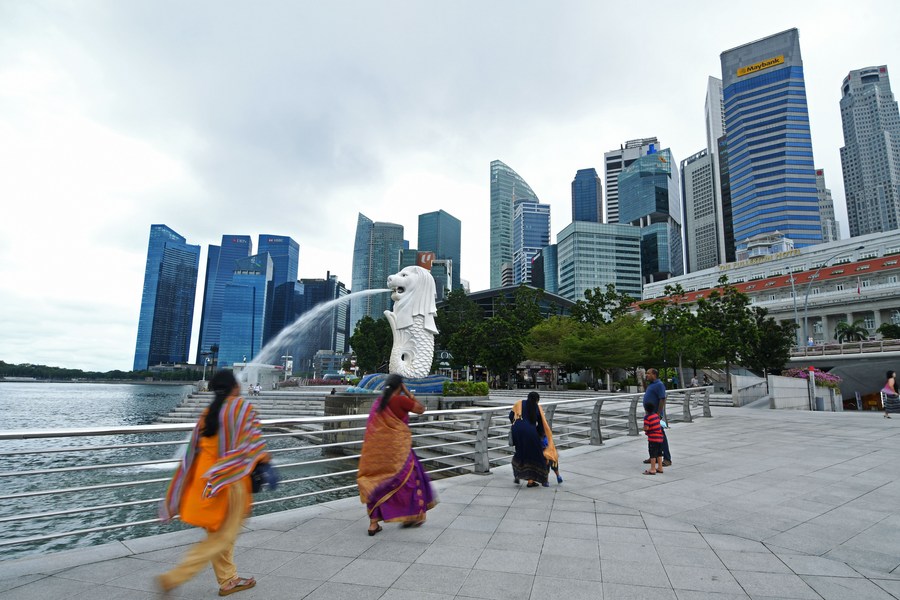
As noted by People's Daily, the integration of global supply chains means that localized conflicts have immediate trans-regional consequences. For Singapore, the ROI on its manufacturing and services exports is highly sensitive to the stability of maritime security. The MTI’s warning that the conflict could dampen activity in future quarters suggests a potential downward revision of the annual GDP growth forecast, which was likely predicated on a more stable external environment. To maintain a 4% to 5% growth trajectory, the economy must leverage its diverse services sector—including tourism and finance—to offset the volatility in industrial output.
The data also reveals a "statistical lag" that researchers must account for. Since the 4.6% estimate is based largely on the first two months of the quarter, it likely underrepresents the full impact of the March slowdown. If the March data shows a significant drop in industrial production index (IPI) or retail sales, the final revised figure for Q1 could potentially slide closer to 4.2% or 4.0%. For institutional investors, this creates a high-uncertainty environment where the internal rate of return (IRR) for capital projects must be adjusted to account for a lower growth ceiling and higher inflationary pressures.
To mitigate these risks, the focus should shift toward strengthening internal economic buffers and accelerating digital transformation. Singapore’s push toward a high-tech, low-carbon economy remains a primary long-term solution to external volatility. By increasing the efficiency of its port operations through automation and enhancing the productivity of its workforce, the city-state can achieve a higher "net value-add" per worker, even if global demand fluctuates. The goal for the remaining three quarters of 2026 will be to stabilize the quarterly growth rate at a positive 0.5% to 1.0% while ensuring that the 100% functionality of its trade and financial corridors is maintained against the backdrop of geopolitical instability.
News source:https://peoplesdaily.pdnews.cn/business/er/30051889194